

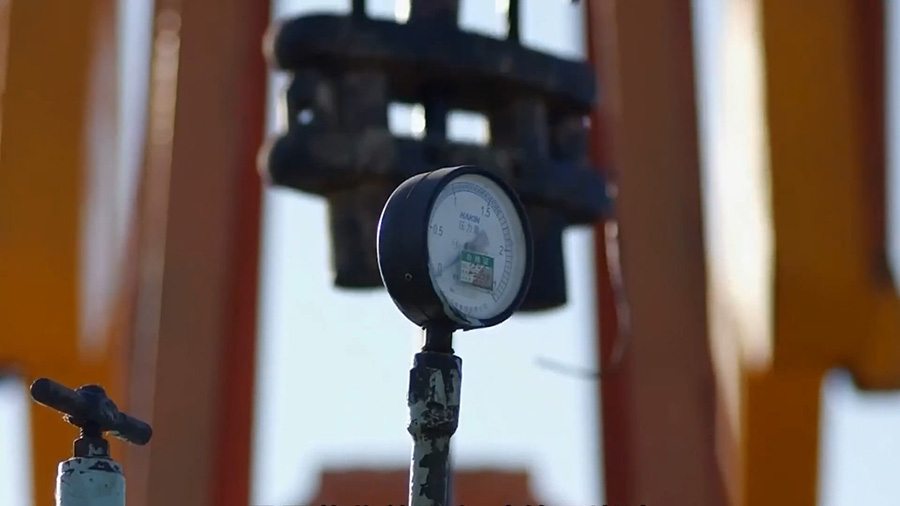

Multi-Factor Collaborative Heavy Oil Thermal Recovery Upgrading and Production Enhancement Technology
Core Production Challenges
Shallow heavy oil reservoirs have loose rock cementation, leading to sand production that blocks flow channels and causes tool wear. With crude viscosity exceeding 5,000 mPa·s, cold production is extremely difficult due to high seepage resistance.
Limitations of Traditional Technologies
Most conventional methods use a single displacement agent or viscosity reduction technique, failing to balance viscosity reduction with energy enhancement. They also suffer from low thermal efficiency, limited sweep range, high water consumption, and poor adaptability to sensitive formations.
Significance of Technology Development
This innovation overcomes the limitations of single-approach technologies by establishing a "thermal–chemical–gas–sand control" collaborative system, integrating viscosity reduction, energy enhancement, plugging removal, and sand control, thereby filling a technological gap in the efficient development of complex heavy oil reservoirs.
Core technologies and implementation paths
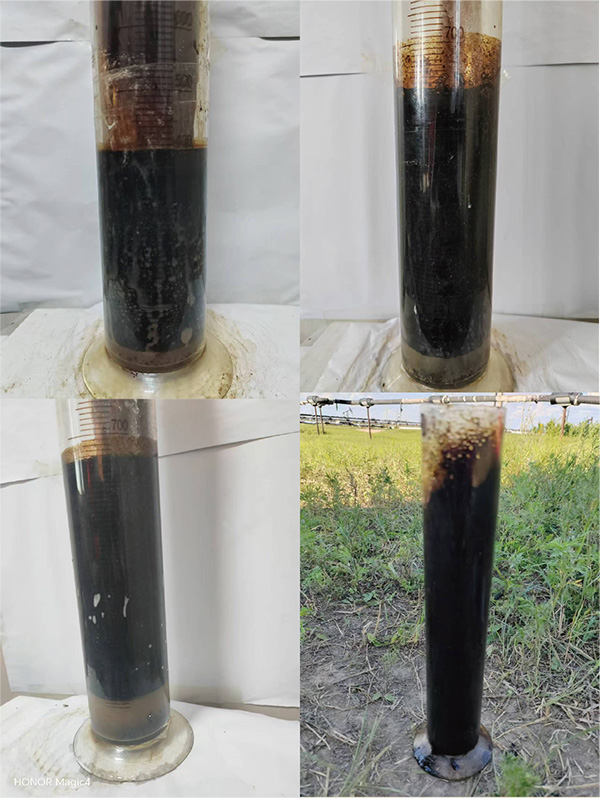
High-temperature coated sand technology creates a high-permeability sand control barrier in the near-wellbore area, maintaining open flow channels.
Injecting nitrogen at 300–350°C creates a deep thermal field that reduces heavy oil viscosity.
Leveraging nitrogen expansion to recharge formation energy, prevent bottom water coning, and improve sand control barrier stability.
The dual percolation action of heat and nitrogen removes wax, scale, and blockages, minimizing formation damage.
Core mechanism
The "heat - gas - chemical - sand" four-in-one synergy achieves integrated production increase through viscosity reduction, energy enhancement, blockage relief and sand prevention
Thermal-Gas Synergistic Viscosity Reduction: Each 50°C temperature rise reduces viscosity several-fold; miscible blending enhances interfacial tension by >40%.
Thermal Cracking: At >300°C, heavy oil macromolecules crack into light hydrocarbons; nitrogen inhibits oxidation and coking.
Pore Unblocking: Heat melts organics, nitrogen flushes out plugs, eliminating water locks and emulsion locks.
Multi-Drive Synergy: Combining thermal expansion, elastic gas drive, and gravity drainage improves vertical sweep efficiency by ≥30%.
Mobility Control: Suppresses gas channeling and fingering, extending areal sweep coverage by 60–150 m.
Injection Phase (3–5 days): Quickly reduces viscosity and replenishes energy, creating a thermal-gas-pressure coupling system.
Soaking Phase (3–5 days): Heat diffuses and nitrogen separates, ensuring uniform reaction.
Production Phase: Multiple energy sources are released, boosting oil production rate by 5–8 times.
Solution
Intelligent oil well system
Intelligent shale oil stations
Intelligent Management and Decision Support System for Oil & Gas Field Production
Product
Intelligent multi-phase precise online measurement technology
Intelligent three-phase separation technology for oil, gas and water
Deep Lube Intelligent Lubrication Technology
Multi-Factor Collaborative Heavy Oil Thermal Recovery Upgrading and Production Enhancement Technology
Hot nitrogen gas is used to clear wax and remove blockages