

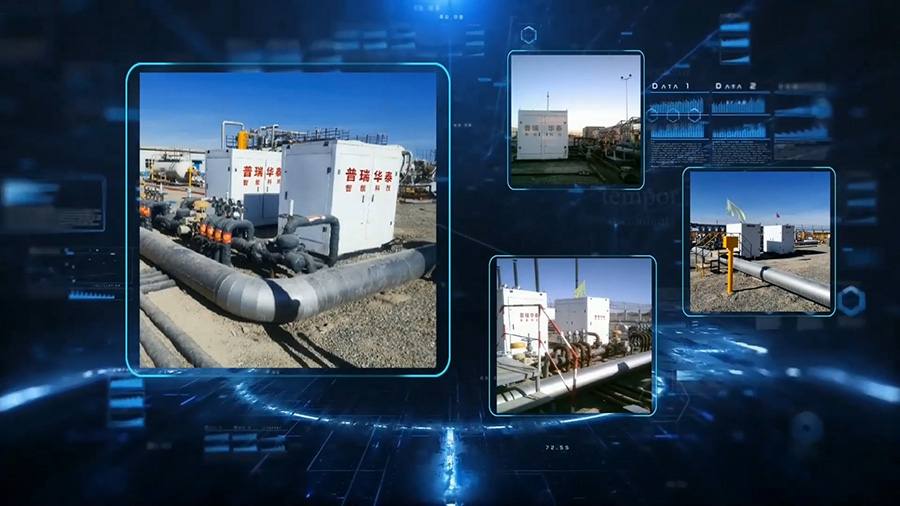

Intelligent multi-phase precise online measurement technology
Undissolved gas in crude oil leads to false volume readings.
Manual metering: difficult, hazardous, and costly.
Labor-intensive and mostly lacking single-well data accuracy.
High measurement errors, largely limited by medium and operating conditions.
For digital oilfield construction, there is an urgent need for high-precision, highly adaptable multiphase metering sensors capable of real-time single-well production data acquisition.
Technical features
The metering equipment has proven its wide adaptability to different crude oil types (including heavy and light oil) and all weather conditions through field applications in major domestic oil-producing regions under varying climates and crude oil media.
During well metering, the real-time display interface (showing liquid flow rates, instantaneous water cut, etc.) allows operators to monitor changes in oil, gas, and water production. This enables an "online health check and preventive maintenance" approach, providing production guidance and extending well life.
Using an algorithm-based metering principle, the equipment delivers high accuracy and stable performance in measuring daily liquid output, daily gas output, and water cut, with metering uncertainty of no more than ±2%. The system has also received a test report from a national statutory certification body.
The equipment features intelligent, visualized, and remotely transmittable operation throughout its entire process. With self-learning capabilities, the system can predict oil well production trends and connect to the oilfield production management system via mobile devices, PC clients, or the cloud, significantly improving well management efficiency. Designed with open-source architecture, the system can integrate various detection devices and serves as a "smart oilfield" port device.
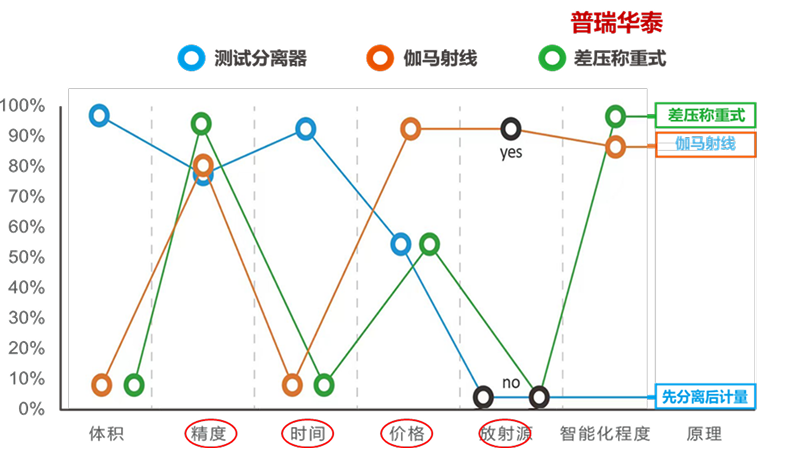
Advantage comparison
High degree of automation (controllable via remote settings)
Accurate data acquisition and metering (measurement error within ±2%)
Low construction cost (approximately 90% lower than traditional metering stations)
Low labor cost (unattended operation; manpower ratio of 1:6 compared to traditional metering stations)
Low operation and maintenance costs (low energy consumption; non-pressure vessel design reduces administrative approval procedures)
Simple installation and small footprint, significantly reducing pipeline construction costs
Solution
Intelligent oil well system
Intelligent shale oil stations
Intelligent Management and Decision Support System for Oil & Gas Field Production
Product
Intelligent multi-phase precise online measurement technology
Intelligent three-phase separation technology for oil, gas and water
Deep Lube Intelligent Lubrication Technology
Multi-Factor Collaborative Heavy Oil Thermal Recovery Upgrading and Production Enhancement Technology
Hot nitrogen gas is used to clear wax and remove blockages